 Viking Electrical
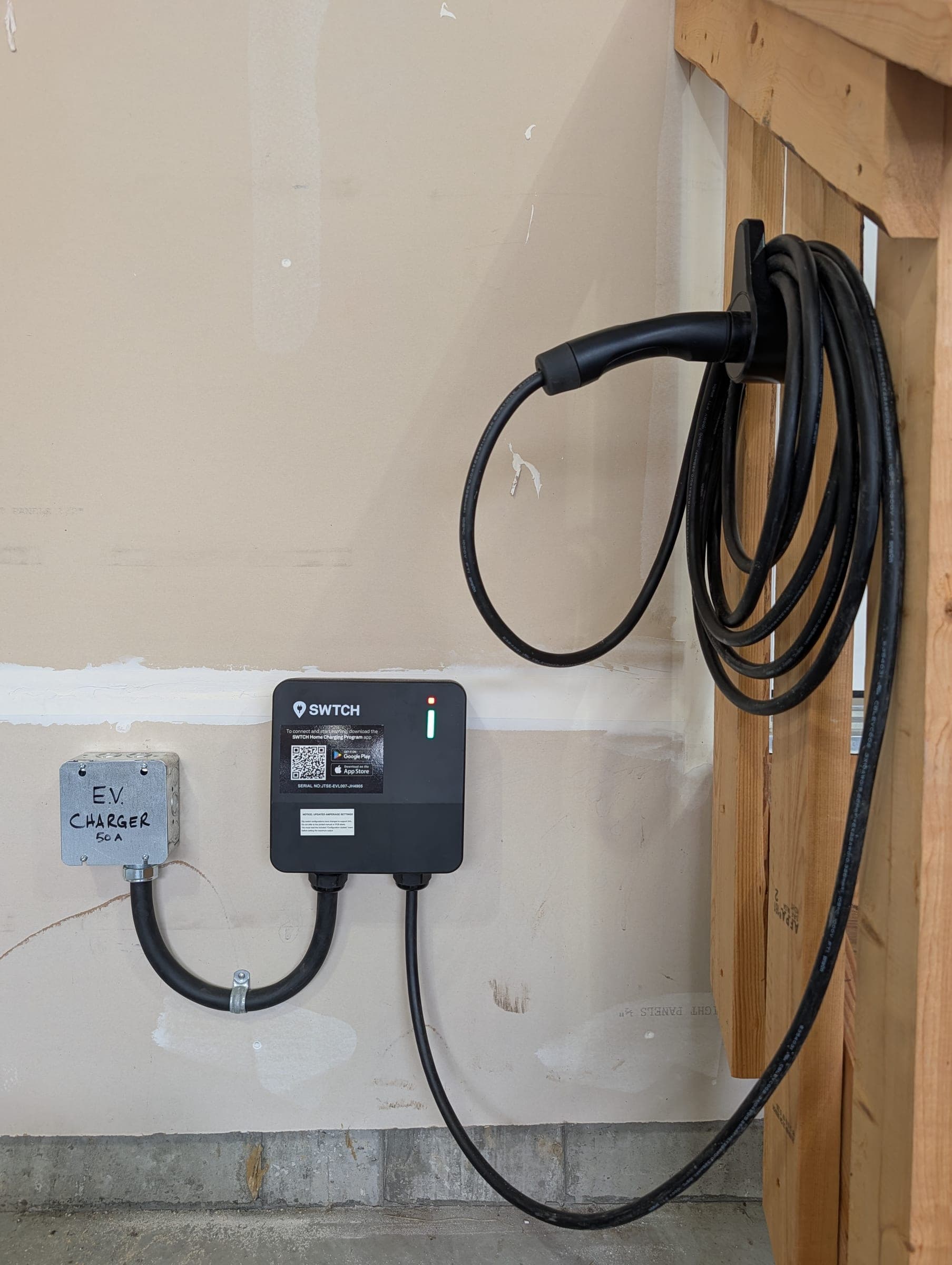
A full charge every morning
Home EV Charger Installation
Cold mornings cut into range. A Level 2 charger at home means you start every day with a full battery. We check your panel, handle the permit and wire it properly the first time.
What Goes Into a Charger Install
It's more than hanging a box on the wall. Here's what a complete, permitted install includes.
Load calculation
Before anything else, we add up what your house already draws and check the charger fits within your electrical service. This decides what the rest of the job looks like.
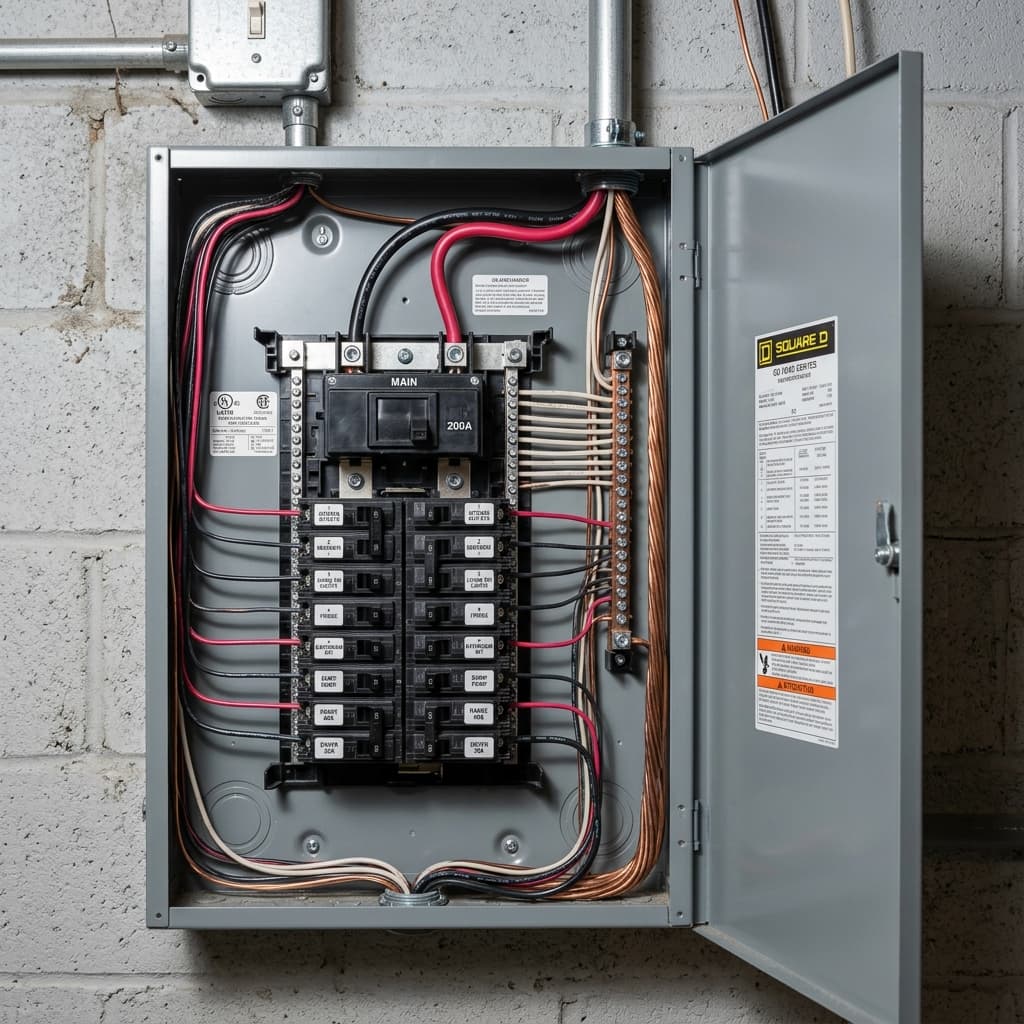
A dedicated circuit at the panel
The charger gets its own 240-volt breaker in your panel, sized to the charger. Nothing else shares it.
A heavy cable to where you park
Chargers draw a lot of current for hours at a time, so they need thick wire run from the panel to the garage or driveway. The distance, and the walls and finished ceilings in the way, are a big part of why quotes differ from house to house.
The right outlet or a hardwired connection
Either a 50-amp, 240-volt receptacle (NEMA 14-50) for a plug-in charger, or a direct hardwired connection. Neither is a regular household outlet.
Weatherproof parts for outdoor installs
Outside, the run needs weather-rated conduit, fittings and connectors, and an outlet needs a cover that stays sealed while the charger is plugged in.
The charger itself
We'll recommend a charger that suits your car and your panel, and mount it where the cable reaches your parking spot without a stretch.
Every Charger Install Gets a Permit
A charger runs near its full rating for hours at a time. Undersized wire or a loose connection that would never show up on a lamp circuit can overheat under that load. We pull the permit and book the inspection, and a Safety Codes Officer checks the finished work. If your insurer or a buyer ever asks, the install is on record.
When the House Is at Capacity
If the load calculation shows your service can't carry a charger, the install won't pass inspection as it stands. The fix is either a load management device, which slows or pauses the charger while other big appliances run, or a service upgrade. Whichever it is, it's in your quote from the start.
More about service upgradesRequest a Charger Quote
Tell us about your car and where you park.
- Alberta Master Electrician
- Licensed & insured
- Panel capacity check
- Permit & inspection booked
- You deal with the owner, start to finish
Done Right the First Time
Recent work from our Airdrie and Calgary jobs.
Frequently Asked Questions
Does home charging keep up in winter?
Batteries charge more slowly and range drops when it's cold, which is exactly when a Level 2 charger at home earns its keep: you leave each morning with a full charge. Charging in a garage helps too.
Do I need a panel upgrade for an EV charger?
Not always. Many homes have room for a charger circuit. We do a load calculation first, and if the panel is close to its limit we'll go over the options with you, including a load management device or a service upgrade.
Hardwired charger or a plug-in outlet?
Both work. A hardwired charger can usually deliver more power and is tidier outdoors; a NEMA 14-50 outlet lets you plug in a portable charger. We'll recommend what suits your car and your panel.
How much does EV charger installation cost?
It depends on the distance from your panel to the parking spot, the charger you choose and whether the panel needs work. We give you a written quote before any work starts, and the permit and inspection are part of it.
Not Sure What You Need?
Call and talk it through with the electrician who'll do the work. No pressure, just a straight answer.